
Trending
Before we get into a discussion about the economy and interest rates, and how it may impact our red hot real estate market this year, here is a snapshot of our current market conditions.
We are continuing to see strong demand from out-of-town buyers battling over the extremely tight supply of homes available for sale in Cape Coral, as sellers remain firmly in control of the market activity. Over the past six months or so, we have seen some interested buyers step away from our market because of the rising prices and fierce competition, but they are quickly replaced by other interested buyers arriving on the scene.
Right now, many new listings are getting multiple showing appointments as soon as they come onto the market, quickly followed by multiple full price or higher offers. A number of these homes are going under contract with a buyer in a matter of days, with a smaller number sitting on the market much beyond a week or two. Although it is still possible to overprice a home and struggle to attract any buyers, it is virtually impossible to underprice a home as the price will be quickly bid higher to its equilibrium price.
Based on the preliminary January sales numbers for single-family homes in the Cape, the number of closed home sales is coming in some 5 percent above the record number of sales posted in January 2021. But the bigger number is with this January's median sales price, which topped $400,000 for the first time ever in a single month in our overall home market. This is a continuation of the price surge we saw during the tail end of 2021, and it was 31.6 percent higher than the $306,900 posted in January 2021, when prices also surged higher from the previous year, setting the tone for record high price increases in 2021.
We have also seen a significant surge in average home sales prices, which reached $527,488 for the month of January, up 31.8 percent compared to the $400,275 posted in January 2021. This wide gap between median sales prices and average sales prices is, in part, a reflection of the shift to a higher than usual number of million dollar-plus home sales in the Cape.
As of Tuesday, Feb. 15, there were a total of 416 active single-family homes listed for sale in Cape Coral through a Realtor in the Multiple Listing Service, at prices ranging from $225,000 to $5.995 million. There were a total of 34 homes on the market at prices of $350,000 and under, with only seven homes listed for below $300,000. At the other end of the price spectrum, there were 79 homes listed for $1 million and above, with seven of these homes priced at $3 million and up, and two of those listed for more than $5 million. The current median list price for homes in the Cape is $582,450. There were 1,053 homes under contract with buyers as pending sales at list prices ranging from $200,000 to $3.2 million, while foreclosures remained at minimal levels. By comparison, about a month ago on January 19, there were 470 single family Cape Coral homes listed for sale in the MLS, with 933 pending sales in the pipeline, and the median list price was at $519,495.
So the big question we keep getting from both buyers and sellers is how much longer can this record pace of sales and price increases continue? As we mentioned above, right now the demand from out-of-town buyers is outpacing the very tight inventory of homes available for sale, so the dynamics remain in place for another strong year. However, economic headwinds in the form of high inflation, rising interest rates and geopolitical tensions are growing, along with the COVID wildcard, all of which could easily derail the party depending on how these things play out.
The "official" government inflation numbers (which one would argue are much lower than the real rate of inflation felt by most consumers), have been coming in white hot and above expectations. This has left many economists believing that the Jerome Powell-led Federal Reserve has lost control of inflation through their loose monetary policies, and they now expect the Fed to raise the interest rates on the Federal Funds Rate by at least 0.5 percent at their next meeting in March. The pundits then expect the Fed to continue chasing after the abnormally high rate of inflation with a series of rate hikes for the remainder of this year, and likely into 2023.
Thus far, the Fed has been all talk and no action, as they have maintained their low interest rate policies and continued their "emergency" programs of buying back US Treasuries and mortgage backed bonds. They seem to be following the classic pattern of moving slowly, then suddenly, as many believe they have fallen way behind the curve when it comes to fighting inflation. To give them the benefit of the doubt, they may be waiting to see how the Russia-Ukraine and China-Taiwan conflicts play out before their next meeting.
But while the Fed waits, the interest rate markets have reacted by already pricing in rate increases to Treasury yields and mortgages. At the time we were writing this column, the 10-year Treasury Note had crossed above what many feel is the key 2 percent level again, with rates on the 2-year Treasury spiking to 1.56 percent and the 5-year Treasury hitting 1.93 percent. According to Bankrate, on Feb. 15, the 30-year fixed rate mortgage was yielding 4.2 percent, which is up from 3.58 percent back on Jan. 15. We would expect a lot of near term volatility with interest rates, with the threat of higher mortgage rates throughout the year. This could start having a bigger negative impact on real estate, as rising interest rates will create additional affordability issues for more buyers, and could cause home prices to stall out or decline. One caveat to this in our local market is the fact that we tend to have a lot of buyers who are capable of making large down payments or paying cash, so higher interest rates may have a bit less of an impact here in Southwest Florida.
As crazy as our market may seem, we are far from being the craziest real estate market in the world. According to Keith Dicker, CFA, and founder and chief investment officer of IceCap Asset Management Ltd. out of Halifax, Nova Scotia, the U.S. real estate market does not even make the top 5 "Bubbliest" housing markets in the world. New Zealand is in the top spot, followed by our friends to the north in Canada (source is Bloomberg Economics). According to Mr. Dicker, the Canadian economy has been booming, led by the housing and finance industries. They also face "runaway inflation" and "a housing bubble built and enabled upon lower and lower interest rates."
Dicker states that anecdotally, "In addition to people lining up around the block to see open houses, it is also quite common to see 30 to 40 offers being made on every house available for sale." His free February newsletter, titled "How do you know a central banker is lying?", provides an interesting global perspective (go to: www.IceCapAssetManagement.com, if interested). In it, he provides a chart from Bloomberg showing that over half of the mortgage loans in Canada are variable rate mortgages, because these loans, which start out with extremely low interest rates, are the only way a lot of Canadians can afford to finance a home purchase. If (when) interest rates rise, it could have a devastating impact on their housing market and economy.
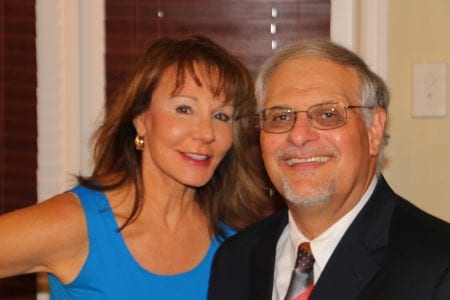
The sales data for this article was obtained from the Florida Realtors Multiple Listing Service Matrix for Lee County, Fla., as of Feb. 14, 2022, unless otherwise noted. It was compiled by Bob and Geri Quinn and it includes information specifically for Cape Coral single-family homes, and does not include condominiums, short sales or foreclosures. The data and statistics are believed to be reliable, however, they could be updated and revised periodically, and are subject to change without notice. The Quinns are a husband and wife real estate team with the RE/MAX Realty Team office in Cape Coral. They have lived in Cape Coral for over 42 years. Geri has been a full-time Realtor since 2005, and Bob joined with Geri as a full-time Realtor in 2014. Their real estate practice is mainly focused on Cape Coral residential property and vacant lots.