
Trending
As war rages in Ukraine, and the power play face off between Russia and the United States escalates, we couldn't help but feel a deja vu-type flashback to the Cold War years of our youth during the 1960s. The chaos being created brought to mind the old television sitcom "Get Smart," where the late actor, Don Adams, played the role of Maxwell Smart, known as Agent 86, who worked for a Washington, D.C.-based counter intelligence agency called CONTROL. The show, created by the late Mel Brooks and Buck Henry, ran from 1965 through 1970 and it was a spoof of the popular James Bond and Inspector Clouseau movies of that time. As Agent 86, Smart employed a vast array of spy gadgets, including a "way before its time" shoe phone, as he managed to inadvertently stumble his way to preventing a global calamity in his weekly battles against an international organization of evil called "KAOS."
So here we are some 50-plus years later, possibly re-entering another Cold War, or worse, with the Putin-led Russia seemingly wanting to create even more global KAOS by bringing back the old days of the Soviet Union.
With utter KAOS and tragedy spreading faster than a California wildfire throughout just about every facet of life as we know it, today we will explore what this may mean for our local real estate market as the potential of a severe global recession is building. Clearly, the war between Russia and Ukraine has added a volatile accelerant to many of the economic problems that were already in place, illustrating just how quickly KAOS can spread in a domino effect throughout a global economy where everything is intertwined and there are very few "firewalls" in place. In fact, the latest buzz phrase being tossed around right now by some economic and market analysts seems to sum up the current unstable situation and all of the potential unintended consequences best, simply describing the KAOS as "unknown unknowns," with extreme volatility running rampant with every move and counter move.
Outside of the war zone, the first thing on the agenda for our economy and housing market is the Federal Open Market Committee meeting next week, where it has long been expected that the Jerome Powell-led Federal Reserve will finally start shifting direction from its wildly loose monetary policies and begin raising interest rates. For some perspective, some believe the Fed has been manipulating the markets with its "emergency" zero interest rate policies (ZIRP) since the Great Recession years, which amounts to well over the past 10 years. This "free money" from the Fed that has been sloshing around in our financial system for years now, has helped boost stock prices and has kept interest rates, including mortgage rates, abnormally low while also funding wild government spending and massive amounts of debt. There was a brief period back in 2018 when the economy was strong enough for the Fed to finally begin to move away from its "emergency" interest rate policies and begin raising interest rates, but when the stock market sold off and the economy started to stall out, the Fed quickly reversed course back to ZIRP.
Obviously, the COVID crisis then disrupted everything, justifying the Fed's emergency ZIRP position during that time, but many would now argue that it eventually enabled the politicians in Washington, D.C., to hand out too much "free" money leading to widespread waste and fraud. Add in a major shift to our country's energy policy at the beginning of 2021, and inflation took hold, only to suddenly spiral wildly out of control this year with the war in Ukraine and the resulting economic sanctions against Russia. Now facing total KAOS in the global energy markets and rapidly rising gas prices at the pumps, the Fed is in the awkward position of needing to raise interest rates to try to contain what it erroneously claimed was transitory inflation, in the face of the growing potential of a severe recession and Stagflation.
The level of KAOS with the rapidly increasing threats of global food shortages and rising food prices, along with the spike in oil prices (which at the time of this writing were around $125 per barrel, up from an already high $92 per barrel prior to Russia's invasion) have left the Fed handcuffed. Again, the already high prices for pretty much everything prior to the war have now skyrocketed. Also, the supply chain disruptions and shortages will likely get worse over the coming months.
One example of this, discussed by economist John Mauldin in his weekly "Thoughts From The Frontline" newsletter on March 5, dealt with the ongoing global shortage of semiconductors, which were just starting to recover from the COVID disruptions. Mauldin pointed out that neon gas is a crucial component in the production of semiconductors, and that 70 percent of the world's neon gas is produced and exported from Ukraine. And roughly two-thirds of the ultra pure neon gas required for "chips," comes from a single factory in Odessa, Ukraine.
According to Mauldin, if shipments of neon gas from Ukraine should stop, analysts say global chip makers probably have about eight weeks of supply on hand, so disruptions are likely. He also discussed the fact that Ukraine is the "breadbasket" of the world and the spring planting season for food crops is fast approaching, so any disruptions caused by the war will likely wreak havoc on global food supplies.
Let's bring this back to the Cape Coral real estate market, where demand has remained extremely strong into the month of March following a record number of closed home sales and record high sales prices being posted in both January and February. Keeping in mind that the closed home sales in these months mostly went under contract with a buyer as a pending sale some 30 to 60 days prior to the closing, means the effects of the recent KAOS have not been felt in our real estate market yet. So while complete KAOS is reigning in the form of extreme volatility with interest rates, stock prices, energy prices, food prices, commodity prices and inflation, it has yet to hit our housing market. Why is that? It is largely because all of these other markets have real time pricing, while the real estate market has opaque pricing, meaning that there is a lag time of several months or so before these types of things will typically be reflected in home prices.
For now, real estate still appears stable, but if the KAOS in the world ultimately results in the U.S. economy getting slammed by an even more severe level of inflation, potentially leading to a more severe recession or Stagflation, things could change dramatically. As we have noted above, KAOS tends to build up gradually over time, and then unravels suddenly.
Finally, one area of developing KAOS that could impact our local real estate market in 2022 deals with the price increases for flood insurance and homeowner's insurance. We have been seeing this issue come more into play lately, affecting both home buyers and sellers. We'll get into greater detail about this next week, along with some other market indicators and potential warning signs to keep an eye on.
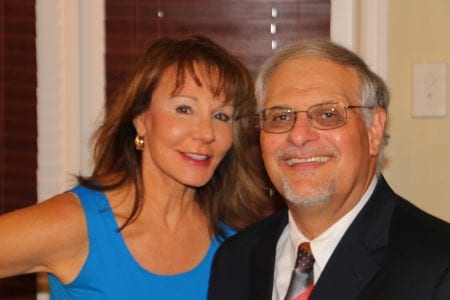
The sales data for this article was obtained from the Florida Realtors Multiple Listing Service Matrix for Lee County, Fla., as of March 8, 2022, unless otherwise noted. It was compiled by Bob and Geri Quinn and it includes information specifically for Cape Coral single-family homes, and does not include condominiums, short sales or foreclosures. The data and statistics are believed to be reliable, however, they could be updated and revised periodically, and are subject to change without notice. The Quinns are a husband and wife real estate team with the RE/MAX Realty Team office in Cape Coral. They have lived in Cape Coral for over 42 years. Geri has been a full-time Realtor since 2005, and Bob joined with Geri as a full-time Realtor in 2014. Their real estate practice is mainly focused on Cape Coral residential property and vacant lots.