
Garden Club of Cape Coral | Signs of fall in our Florida gardens
Trending
If you're looking for fall like you experienced "up north," where freezes turn leaves red and golden before they fall, you might say Cape Coral doesn't have a fall. Since our plants just keep growing all winter (although more slowly) most of our leaves don't "fall."
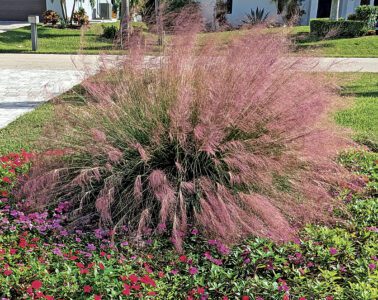
Yet we do have some fantastic seasonal color. I recently drove up to Babcock Ranch, just north of the Lee County line, and saw a breathtaking display of pink muhley grass. About 3 feet high, swaying in the breeze, mauve-colored muhley grass is planted block after block. Instead of a lawn between the street and sidewalk, they planted muhley.
In Cape Coral, you can see muhley in bloom in the median along Coronado Boulevard north of Cape Coral Parkway up to Del Prado. You will also see many plants along Cultural Park Boulevard at the Police Department property.
When the blooms have faded, January is a good time to trim them down to about six inches. This simulates the burning that would naturally occur in the dry season in pine flatwoods. Be on the lookout for other grasses which also put up their blooms in the fall and look their finest from now to December.
Asters bloom in late fall when many other flowers have gone to seed, providing late season nectar for our pollinators. Climbing aster grows well in our climate, covering itself with fragrant lavender flowers in late November to January. It gets so heavy it tends to fall over unless it has a fence to lean on. They are a perennial shrub and grow all year long, year after year. In the spring, after blooms are finished, trim it way back.
Chrysanthemums are in the aster family. However, garden mums cannot tolerate tropical heat and summer humidity in the southern half of Florida. They evolved mainly in temperate China. You may buy them to enjoy temporary fall color, but I find they are very short lived here.
If you have walked some of the beautiful preserves in Lee County, you have probably noticed beautyberry growing in the shade of surrounding trees. It is a shrub, about 4 to 8 feet tall and striking in the fall-winter for its bright purple fruit. A mature beautyberry has long, arching branches that will weep toward the ground. It will grow in sun or shade.
The dense clusters of purple berries encircle the stems. These berries are an excellent food source for birds such as cardinals, blue jays, mockingbirds and woodpeckers. The bush is briefly deciduous in late winter, making the fruit even more visible. Some recommend rubbing crushed leaves on skin in order to repel mosquitoes and other biting bugs. Native American tribes reportedly used beautyberry for medicinal purposes to treat malarial fevers, dizziness, stomachaches and dysentery.
Muhley grass, climbing aster and beautyberry are all native Florida plants. They will grow easily in our naturally sandy, nutrient-poor soil without extra water or fertilizer. However, the first year they will need extra water until they root deeply into the soil. They also appreciate 2 to 4 inches of mulch to help retain water and nutrients in the soil.
Have a real Florida landscape with resilient native plants and attract a variety of birds, pollinators and other living things that keep our ecosystem alive!
"Destroying forest for economic gain is like burning a Renaissance painting to cook a meal."
-- Edward O. Wilson
This is a reminder to not use cypress trees for mulch. Instead, use Florimulch, made from invasive melaleuca trees or use pine straw, which are renewable.
Sherie Bleiler is a volunteer at the Cape Coral Library Butterfly Garden and a member of the Garden Club of Cape Coral. Visit www.gardenclubofcapecoral.com. Like us on our Facebook page.