
Cape Coral Police Department Q&A on Flock cameras
Trending
A BREEZE Q & A
news@breezenewspapers.com
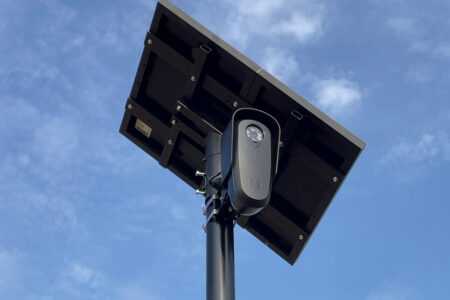
Editor's note: In response to community concerns about privacy and reports out-of-state arrests related to the misuse of Flock cameras, The Breeze submitted some questions to the Cape Coral Police Department. We planned to use the responses to prepare a story on local use and safeguards. CCPD Public Affairs provided a comprehensive Q&A response.
We have opted to publish that response as submitted, including one addition from the department: "The data collected belongs solely to CCPD. We do not sell data, and tech vendors do not sell data that is collected by our assets. A common misnomer," the department stressed.
Q & A
Does the Cape Coral Police Department use an audit-assistance tool provided by Flock Safety? Is it a free or paid option?
Yes. The Cape Coral Police Department recently enabled Flock Safety's Audit Assistance feature within the Flock platform. The feature is provided by Flock at no additional cost and serves as an additional accountability measure by identifying searches that may warrant administrative review.
The Audit Assistance feature supplements, not replaces, the Department's existing oversight processes. User activity has always been subject to audit through comprehensive system logs, supervisory review, and Department policy. The feature provides an additional automated layer to help identify potentially anomalous activity so it can be reviewed by Department personnel.
Does the department conduct in-house audits? How frequently, and does the city have a system that flags potential problems?
Yes.
The Department maintains internal oversight of all License Plate Recognition (LPR) systems. Activity within the Department's LPR platforms is logged and attributable to the individual user through unique credentials. Audit information includes the identity of the user and the date and time of system activity.
Department-designated Agency Managers may review system audit trails at any time. The Chief of Police may also direct announced or unannounced inspections of audit trail data. Audit information may be reviewed as part of routine administrative oversight and may also be used during administrative or internal investigations.
Flock's Audit Assistance feature provides an additional automated safeguard by identifying potentially unusual search activity for further review. A flagged search does not, by itself, establish that misuse occurred. Rather, it serves as an indicator that prompts administrative review of the search, its documented purpose, and the surrounding circumstances.
What are the Department's in-house protocols related to monitoring system activity and detecting or preventing abuse?
The Department employs multiple layers of administrative, technical, and supervisory controls to ensure the system is used only for legitimate law enforcement purposes.
Those safeguards include:
• Access is limited to authorized personnel with an official law enforcement need.
• Users must receive training before being granted access.
• Each authorized user is assigned an individual account, and account sharing is prohibited.
• User permissions are assigned based upon operational need.
• Users must document a case number, report number, or other legitimate law enforcement purpose when conducting investigative searches.
• All user activity is logged and subject to audit.
• Agency Managers may review audit trails, and the Chief of Police may direct announced or unannounced audits or inspections.
• Personal use, harassment, intimidation, invasions of privacy, and other unauthorized uses are expressly prohibited.
• Suspected misuse may result in an administrative or internal investigation and appropriate disciplinary action.
The Flock Audit Assistance feature adds an additional automated layer of accountability to these existing safeguards. Human review remains essential because a search that appears unusual may nonetheless have a legitimate investigative purpose.
How many Flock cameras does the Department have, and when were they first installed?
The Cape Coral Police Department does not publicly disclose the number or locations of deployed License Plate Recognition (LPR) cameras. Releasing that information could reveal aspects of the Department's operational capabilities and investigative strategies.
The Department has successfully utilized stationary License Plate Recognition technology in key strategic locations throughout the City for more than a decade. As technology has evolved, the Department has continued to evaluate and implement solutions that enhance public safety while maintaining appropriate safeguards, accountability, and oversight.
What has been the Department's investment?
The Department's Flock Safety camera network was provided through RedSpeed at no cost to the Cape Coral Police Department.
What are the benefits of the devices?
License Plate Recognition technology is an important investigative and public safety tool. It enables officers and investigators to rapidly compare observed license plates against law enforcement databases and alerts, allowing them to identify vehicles associated with stolen vehicle reports, wanted persons, missing persons, AMBER Alerts, Silver Alerts, violent crimes, and other criminal investigations more efficiently than could be accomplished through manual observation alone.
Among its benefits, the technology:
• Assists in locating stolen or wanted vehicles.
• Generates investigative leads after crimes have occurred.
• Helps identify vehicles associated with violent crimes and other serious offenses.
• Assists in locating missing or endangered persons.
• Enhances officer safety by providing information about vehicles before officer contact.
• Facilitates information sharing across jurisdictional boundaries.
• Improves investigative efficiency by narrowing large volumes of vehicle data to information relevant to a specific investigation.
Importantly, an LPR alert is never treated as conclusive evidence. Department policy requires personnel to visually verify the license plate and vehicle and then confirm the information through independent secondary sources, such as FCIC or NCIC, before taking enforcement action. An LPR alert alone is not sufficient to justify a traffic stop or other enforcement action.
What are the challenges associated with the technology?
As with any public safety technology, the Department recognizes the importance of balancing investigative effectiveness with accountability, privacy, and public trust.
Potential challenges include ensuring system accuracy, protecting data security, preventing misuse, and maintaining appropriate oversight.
Environmental conditions such as lighting, weather, camera angle, or damaged license plates can occasionally result in inaccurate plate reads. For that reason, officers are required to independently verify alerts before taking any enforcement action.
The Department also maintains safeguards to ensure:
• Access is limited to authorized and trained personnel.
• Searches are conducted only for legitimate law enforcement purposes.
• Investigative searches are documented with an appropriate case number or justification.
• User activity remains auditable.
• Information is protected from unauthorized access or disclosure.
• Records are retained and managed in accordance with Florida law.
• The technology is never used for personal, retaliatory, discriminatory, or other unauthorized purposes.
The Department views License Plate Recognition technology as an investigative aid that enhances officer effectiveness and public safety. It does not replace an officer's independent judgment, constitutional decision-making, or legal obligations. Instead, it provides additional information that must always be evaluated and verified by trained law enforcement personnel before any enforcement action is taken.