
Endangered ‘beautiful pawpaw’ finding new home in Cape Coral and Pine Island conservation efforts
Trending
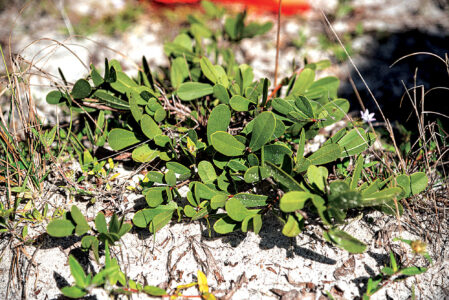
Beneath Florida's sweltering summer sun, a team of dedicated volunteers and conservation experts came together recently to carry out the delicate relocation of the endangered "beautiful pawpaw" to protected conservation lands owned by the Cape Coral Wildlife Trust. The rare plant, Deeringothamnus pulchellus, is native only to Florida and found in just three counties: Lee, Charlotte, and Orange.
The project was led by Danny Young of Little Bear Botanical Services, in partnership with Bok Tower Gardens and the U.S. Fish and Wildlife Service.
CCWT provided relocation sites on its conservation properties--safe havens for wildlife and native flora threatened by ongoing development. In doing so, CCWT continues to expand its mission beyond protecting vulnerable animal species like burrowing owls and gopher tortoises to also include the preservation of Florida's imperiled native plants.
The effort was supported by the Cape Coral Friends of Wildlife, a volunteer-led organization focused on protecting wildlife habitats and educating the public about Cape Coral's unique natural resources. With help from CCFW volunteers, CCWT owns and maintains undeveloped parcels across the city, offering sanctuary for threatened species. Currently, CCWT owns 85 lots across 35 parcels--acquired entirely through land and financial donations from the local community.
Volunteers from across Florida, including representatives from the U.S. Fish and Wildlife Service, gathered at 9 a.m. to begin the day's work. Danny Young briefed the team on their twofold mission: to locate any new populations of beautiful pawpaw and to transplant individuals from construction-threatened areas to safe conservation zones.
The group was delighted to find up to 10 of these endangered plants already growing on one of the CCFW lots. These plants were marked and will be added to CCWT's ongoing monitoring program.
Several plants were identified for relocation from lots slated for development. The process was challenging--pawpaw taproots grow deep and thick, resembling oversized carrots. Each plant required painstaking excavation, often involving holes up to four feet deep. Volunteers spent more than an hour extracting each one, carefully hand-scraping the roots and wrapping them in wet towels before placing them in coolers for transport.
The plants were then moved to one of CCWT's northernmost conservation lots, located at 3704 N.W. 47th St. in Cape Coral. There, volunteers treated the roots with a transplant stimulant and planted them using a moisture-retaining silicone gel to reduce shock and keep the roots hydrated.
"This work was hot, physical, and incredibly detailed," said CCWT President Cheryl Anderson. "But the dedication of everyone involved was inspiring. These people care as deeply about Florida's rare plants as we do about its owls and tortoises."
This relocation marks the culmination of a four-year effort that included grant writing, site scouting, and land coordination. Some of the rescued pawpaw plants will also become part of the rare plant collection at Bok Tower Gardens.
The following day, the team continued its work on Pine Island, partnering with the Big Waters Land Trust to relocate additional pawpaw plants.
Fewer than a dozen people worldwide have ever successfully dug up and replanted the beautiful pawpaw, according to Young -- highlighting both the rarity of the species and the significance of this work.
Now safely relocated to CCWT's protected conservation land, the beautiful pawpaw has a renewed chance to thrive -- standing alongside Florida's equally threatened wildlife in the ongoing fight against extinction.