
Census: Burrowing owls thriving in the Cape
Trending
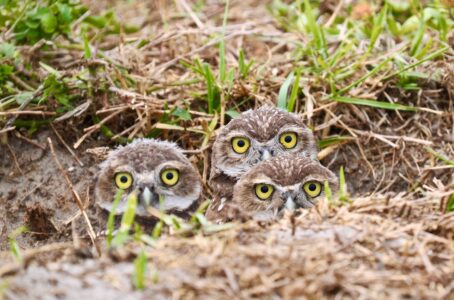
The burrowing owl is Cape Coral's official city bird, and that proclamation was only bolstered following the results of a recent owl census.
The results are in from the 2025 Cape Coral Burrowing Owl Census, and the numbers are nothing short of remarkable, as 7,008 owls were counted during the weekend of May 17. Organized by the Cape Coral Friends of Wildlife, this year's tally marks a significant increase from the approximately 5,200 owls recorded in 2024 and continues an encouraging upward trend in population growth since 2017.
"CCFW is very excited to see that the owl population in Cape Coral is thriving," said the group’s spokesperson Janet Windisch.
More than 100 volunteers from CCFW, local bird enthusiasts and students came out on a hot weekend to count the species, with organizers saying they are so appreciative of the volunteers who persevered in the heat to get an accurate number.
CCFW officials state this success story is a testament to the collaborative efforts among the city of Cape Coral, the community, Florida Fish and Wildlife Commission and CCFW. Together, they've created an environment in which this threatened species can not only survive -- but thrive.
City staff has played a key role by actively enforcing regulations to protect the owls and meticulously recording every reported burrow on an interactive online map. In 2024, the city began acquiring land for wildlife habitat, made possible through a grant from FWC.
"It's so gratifying to have the community, FWC and the city pulling in the same direction as CCFW," Windisch said. "That's part of the reason the owl population is doing well. As an example, the number of lots purchased by the city as owl habitat using the grant from FWC is now totaled at 10."
CCFW officials said Cape Coral residents continue to embrace their feathered neighbors, as hundreds of citizens contacted CCFW via its hotline (239-980-2593) and through its website, reporting new burrows or raising concerns. More and more homeowners are installing starter burrows in their yards, inviting owl families to share their green space.
Recreation Program Supervisor for the city of Cape Coral, Honey Phillips, has studied the owls for nearly a decade. She notes that burrowing owls are particularly well-adapted to Cape Coral's unique urban landscape. "The open, low-mowed lots create a prairie-like habitat," she explains, "and the abundance of artificial lighting attracts insects--providing a rich food source for owls."
Additionally, owls often use porches and building eaves as daytime shelters. Weather patterns may also have played a role in this year's population increase. The recent drought reduced instances of burrow flooding, a hazard during chick-rearing season.
While these are promising results locally, burrowing owls as a species are state-listed as threatened by the FWC and conservation efforts are of critical importance.
"We need to continue our conservation efforts because the threats to the burrowing owls continue," Windisch said. "There are some indications that the owl population could peak and decline in the future. Also, while the owls are doing well in Cape Coral, that is not the case in rural areas and other parts of the state.
"The increased number of owls means a higher work load for our volunteers. We have more new burrows to mark and more to trim. But this is the kind of work we love and are dedicated to."
FWC Avian Conservation Coordinator Nick Jennings notes that, "while some urban populations are showing encouraging trends, others may be more vulnerable, and we still have much to learn about populations and trends of burrowing owls living outside of urban areas. Although they can thrive in urban environments, studies show their success may decline when areas reach a certain development threshold. That's why urban conservation efforts are so critical."
On Wednesday, FWC approved revisions to the Florida Burrowing Owl Species Conservation Measures and Permitting Guidelines at its August Commission meeting.
FWC officials in a release state, "the goal of the update is to maximize conservation value of permitting actions, improve regulatory certainty, and streamline the permit review process for stakeholders and FWC staff. Key revisions include standardizing mitigation for projects involving significant habitat modification, expanding options for long-term permitting, and clarifying specific concepts, definitions and requirements. Guidelines are designed to be a tool for landowners, consultants, agency partners and other interested parties on how to conserve State-designated Threatened species.
"Recommended conservation measures and survey methods are included to promote actions that benefit these species. These guidelines also include options for avoidance of take and options for permitting that minimize and mitigate unavoidable harm or harassment."
CCFW officials say habitat loss, automobile strikes, and secondary poisoning from rat poison remain ongoing threats for burrowing owls.
Windisch added, "We want our children and future generations to be able to enjoy these animals. They benefit our the ecosystem by consuming insects and rodents. Their burrows are occupied by many other species. So if the owls disappear many other species will be impacted."
Members of the community can support the burrowing owl by:
• Avoid using rat poison, which can harm owls through secondary poisoning.
• Reduce or eliminate the use of pesticides.
• Install a starter burrow in your yard.
• Volunteer or donate to support conservation efforts through Cape Coral Friends of Wildlife.
Windisch said CCFW will continue its work of marking new burrows, trimming vegetation on conservation lots, installing starter burrows, educating the community, and responding to phone call about concerns.
"And, very importantly, we are continuing our efforts to raise funds to acquire land for wildlife habitat," she said. "In partnership with Cape Coral Wildlife Trust, 87 lots in Cape Coral have been preserved forever as habitat for the owls and other species like gopher tortoises. We need to go full speed ahead acquiring habitat as many open lots in Cape Coral are being developed."
CCFW will soon be launching a brand new Facebook group designed to give Cape Coral residents a place to share wildlife sightings, connect, learn, and get involved in protecting the creatures we live alongside -- from burrowing owls to gopher tortoises and more.
"This group will serve as a space for everyone who cares about Cape Coral's wildlife to connect, share, and engage," Windisch said. "Our goal is to build a stronger sense of community among supporters and provide more opportunities for interaction and involvement."
Part of the launch will be the "Burrowing Owl Strut" -- an original song and dance challenge designed to bring the community together, raise awareness, and celebrate the owls that are a symbol of Cape Coral. The song was written locally, and CCFW is encouraging families, schools, first responders, and local businesses to join the challenge by posting their own "strut" online and tagging the group after the launch.
Cape Coral Friends of Wildlife is a volunteer-driven nonprofit organization dedicated to preserving and enhancing the habitats of protected wildlife species in Cape Coral. Founded in 2001, CCFW focuses on educating the community about local wildlife resources and advocating for conservation efforts.
Any individual interested in donating land or making a financial contribution for wildlife habitat or CCFW's mission can contact CCFW at ccfriendsofwildlife.org or call at 239-980-2593.