
Garden Club of Cape Coral | Fanpetels – a magnet for skippers
Trending
By SHERIE BLEILER
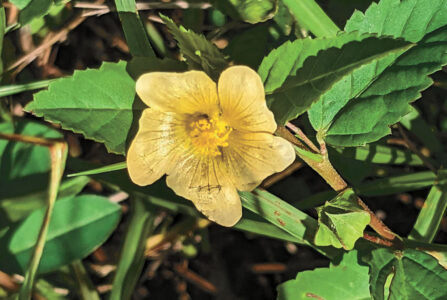
I found this pretty yellow flower next to my mailbox in my lawn. Before I yanked it out as a weed, I decided to find out a little more about it. The name is common fanpetels or sida ulmifolia.
There are a number of different kinds of sida growing throughout the world. But common fanpetals is only found in Florida and the Caribbean. What makes it most useful to me is that five of our butterflies pick this plant on which to lay eggs and grow their young.
Here in Cape Coral, the three checkered skipper species -- common, white and tropical -- pick this plant to host their caterpillars. (I cannot tell these butterflies apart.)
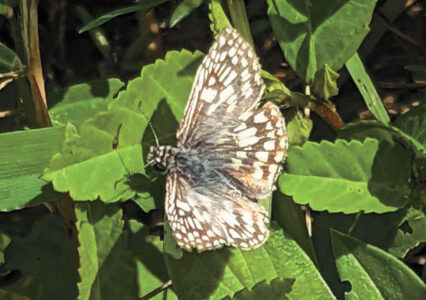
A skipper. SHERIE BLEILER
Skippers look like a sort of cross between a butterfly and a moth. They are rather small, about 1 1/4 inches wide and very fast flyers, preferring open country and grassy fields. When they land on a flower, they keep their wings outstretched, so you can clearly see the striking pattern, with the dark gray or brown background and white checkered spots. At night however, they cling to tall grass with their wings closed. The checkered underside of their wing is more white than black.
To hide, the caterpillars roll a leaf and seal it with their silk. Then they can munch on the leaves in peace. As they get older, they may pull several leaves together with their silk to hide. They are light yellowish green with a black head, so they blend in well with the leaves.
Fanpetals plants also host two other small butterflies -- the gray and mallow scrub-hairstreak. Both of these butterflies lay eggs on a large variety of other plants as well.
Back to the sida plants; they are in the mallow family with plants like hibiscus, okra and cotton. They can be found on most of our empty Cape Coral lots. Fanpetals can grow up to 3 feet tall if they do not get cut down in your lawn every week. With a deep tap root, they endure drought, being eaten by caterpillars and ... mowing. They can live in just about any soil as long as they have plenty of sun. Their half-inch blooms can be seen every month of the year.
I plan to move mine from the lawn to a sunny area in the back yard to join the other native butterfly plants, which already have many varieties of butterflies visiting daily. These plants include senna, coontie, climbing aster, monarda (beebalm), native lantana, yellowtop and turkey tangle frog fruit. The checkered skippers are often seen on the frog fruit flowers.
I have admired these yellow flowers and watched a variety of butterflies come down and sip their nectar. Bees also visit for their pollen. It's a no-brainer that this native Florida flower would attract and support our native pollinators.
When selecting plants to surround our homes, how about searching out the plants that are already here? They just naturally thrive here. You will not need to wonder, "Am I allowed to fertilize this month or water today?" because these plants will not need added fertilizer or water (except to get them settled in).
After we disrupt the natural order by building a house and covering half of the lot with concrete, how about giving something back by planting what belongs here. A real Florida yard!
Sherie Bleiler volunteers at the Cape Coral Library butterfly garden, Sands Park butterfly garden and is past president of the Garden Club of Cape Coral. Visit gardenclubofcapecoral.com. Like us on Facebook and Instagram.