
Garden Club of Cape Coral | Common Florida weeds – part 1
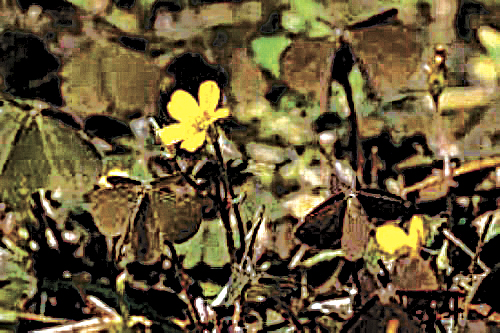
Creeping woodsorrel. UF/IFAS
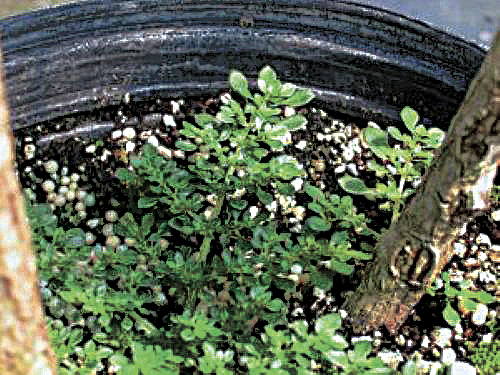
Artillery Fern. PROVIDED
Creeping woodsorrel. UF/IFAS
Artillery Fern. PROVIDED
Trending
By CATHY DUNN
news@breezenewspapers.com
What is a weed? Many botanists refer to weeds as "plants that are out of place," i.e., growing where we don't want them. Compared to insects and diseases, gardeners consider weeds to be the worst problem in their lawn and landscape. Weeds are problematic because they compete with other plants for water, light, nutrients and space, and they reduce the overall aesthetics of our gardens. Weeds can also be invasive or noxious (poisonous) plants that we don't want in our landscape.
We all deal with weeds in our lawns and gardens, and I felt it would be helpful to identify six of the most prevalent weeds that I have encountered here in Southwest Florida. Over the next three months I will write about two common weeds each month with a final fourth article on basic weed prevention and management. I hope you will be able to apply this information to your own gardening efforts!
Artillery weed (Pilea microphylla) is an increasingly common nuisance in nurseries and landscapes in Florida and is most prevalent in Central and South Florida. This weed received its name because it forcefully ejects pollen grains from the small inconspicuous flowers that it produces year-round. The plant's minute, abundant leaves and arching stems give it a fern-like appearance, and the plant quickly forms spreading clumps.
Artillery weed grows in moist, disturbed areas such as container drain holes, cracks in driveways, rock mulch beds and garden beds. While this weed occurs primarily in moist areas, once it is established it will tolerate drought. It can grow in full sun but prefers shaded or indirect light. A low growing succulent, artillery weed can spread up to 2 feet in width and 1.5 feet in height. The plant's stems are nearly translucent green and fragile, and the leaves are egg-shaped. The plant spreads by small seeds that are ejected from the flowers as they mature or from stem fragments. Check your plants when you purchase them for these pesky weeds as they are often found growing in containers!
Creeping woodsorrel (Oxalis corniculata) is another low growing weed that is easily identified by red or purple-tinged clover-shaped leaves and delicate bright yellow flowers. A native Florida weed, creeping woodsorrel can be found throughout the state, particularly in natural areas. The Cherokee used this plant medically to treat hookworms, sore throats, cancer and sores; it was also a food source and used to produce yellow dye. Primarily a cool season perennial, this weed persists year-round in warm climates like Florida.
Creeping woodsorrel is often found in grasslands and woodlands, scattered throughout turf, in sidewalk cracks, disturbed areas and on the surface or around drain holes in containers. It will grow in full or partial sun. The plant is low growing along the soil surface and often forms dense clumps from rhizomes that can form lateral shoots. Bright yellow flowers with five petals adorn the plant from spring through fall. Small seed pods that resemble okra pods are produced spring through fall, with brown teardrop-shaped seeds that are expelled up to 16 feet from the parent plant when touched. Seed production is prolific - a single plant can produce up to 5,000 seeds in a year!
You can find photo identification guides and videos of common Florida weeds just by googling "Weeds UF/IFAS" (University of Florida/Institute of Food and Agricultural Sciences).
Next month we'll learn about American black nightshade and dollar weed, two more problematic weeds that you have no doubt encountered in your gardens.
Cathy Dunn is a Lee County Master Gardener Volunteer, Garden Club of Cape Coral Member and president of the James E. Hendry Hibiscus Chapter. Visit gardenclubofcapecoral.com. Like us on Facebook and Instagram.